Humpty Dumpty Worksheets For Preschoolers
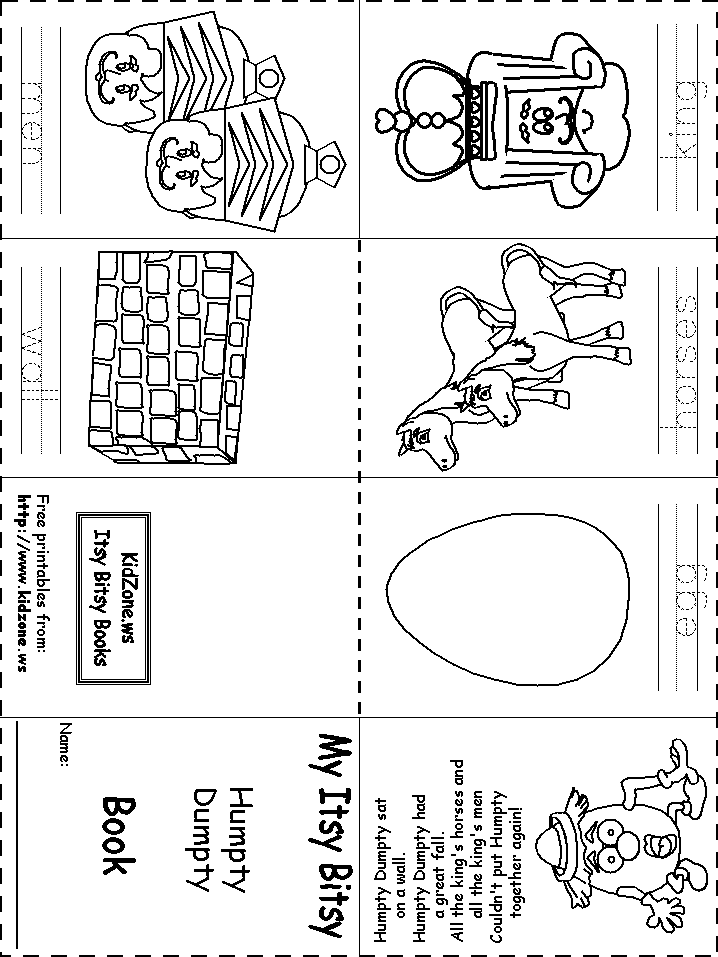
Nursery rhymes are more than just fun children's songs. They serve as excellent educational tools, offering a wealth of opportunities for young learners to develop crucial skills. One such classic nursery rhyme, Humpty Dumpty, is not just a memorable tune, but also a great resource for creating engaging worksheets for your preschoolers.
Humpty Dumpty worksheets combine learning and fun, making them perfect for fostering a love for education in early childhood. With the right approach, these worksheets can help preschoolers improve their cognitive skills while they enjoy their favorite nursery rhyme.
Developing Cognitive Skills with Humpty Dumpty Worksheets
Humpty Dumpty worksheets are an excellent way to introduce and reinforce early learning concepts with a familiar and engaging theme. They can help preschoolers develop and hone various cognitive skills, including problem-solving, logical thinking, and language and literacy skills.


By incorporating a mix of activities like sequencing the nursery rhyme, finding rhyming words, matching objects with their starting letters, and more, these worksheets can cater to multiple aspects of child development.
Building Language and Literacy Skills
Humpty Dumpty worksheets offer numerous opportunities to improve language and literacy skills. Preschoolers can practice reading, writing, and listening skills through activities that involve filling in missing words, completing sentences, or writing their own Humpty Dumpty story.


For example, a worksheet could ask children to complete the nursery rhyme by writing in the lines for "sat on a wall" and "had a great fall." Another could present a story starter like "Once upon a time, there was a Humpty Dumpty who..." and encourage creativity by having children write their own ending.
Improving Mathematical Concepts
While Humpty Dumpty worksheets are primarily focused on language and literacy, they can also be designed to incorporate mathematical concepts. For instance, children could practice counting by Easter eggs in the nursery rhyme or solving simple addition or subtraction problems involving Humpty Dumpty and his friends.
Patterns can also be introduced through worksheets. For example, a worksheet could ask preschoolers to identify the pattern in the nursery rhyme (e.g., all the text is in short, simple sentences) or create their own pattern using objects related to Humpty Dumpty's story.



Enhancing Social and Emotional Learning
Humpty Dumpty worksheets can extend beyond just academic skills, fostering social and emotional learning as well. Worksheets can encourage children to think about how characters might feel in different situations, practice turn-taking and cooperation, or express their own emotions in stories they create.
For instance, after learning about Humpty Dumpty's fall, children could be asked, "How do you think Humpty Dumpty felt after his fall? Why?" Or they could respond to a prompt like "Draw a picture of a time when you felt happy, sad, or angry and write about what happened."
Encouraging Creativity and Imagination
Humpty Dumpty worksheets can stimulate creativity and imagination through open-ended activities. Preschoolers can draw and color their own pictures to illustrate the nursery rhyme or create their own Humpty Dumpty story with their own characters and adventures.


These worksheets can also encourage role-playing and dramatic play. Children could act out the nursery rhyme, creating their own dialogue and actions, or create a new story entirely, fostering language development, creativity, and social skills.
In using Humpty Dumpty worksheets, it's important to remember that the goal is to keep learning fun and engaging. By incorporating a variety of activities and catering to different learning styles, these worksheets can effectively help preschoolers develop essential skills while enjoying a beloved nursery rhyme.
Related Articles

Letter J Printable Worksheets for Preschoolers: Fun Learning Sheets
Letter 'J' printable worksheets are an invaluable tool for preschool educators and parents, helping young learners develop essential early literacy skills in a...

Free Printable Color Black Worksheets for Preschoolers
Welcome to a world of learning and fun! Looking for engaging, free printable color black worksheets suitable for your little ones at home? You've come to the...

Humpty Dumpty in Black and White
Ever heard of Humpty Dumpty? You probably know the nursery rhyme, but you might not be aware of the intriguing black and white interpretation of this beloved...

DLTK Worksheets: Engaging Preschool Activities
Help your little ones develop vital skills with DLTK's free, printable worksheets designed just for preschoolers. DLTK (Dancing Little Tha Um Kip) worksheets...

Humpty Dumpty Puzzle Printable: Fun & Educational
Are you looking for a fun and educational way to keep your little ones engaged? Why not try the Humpty Dumpty puzzle printable? This classic nursery rhyme...

Free Apple Tree Coloring Sheets for Preschoolers
Exploring early childhood education often leads us to the delightful intersection of learning and creativity, where a simple apple tree can blossom into a...